
Most of us are trained to look for answers. Very few of us are trained to look for better questions. It’s a small difference, but it changes everything. A question can send you down a road no textbook mapped out. The right one can make something that seemed settled feel suddenly open again.
Assumptions Versus Questions
A wrong question usually has a built-in assumption. “Why doesn’t this work the way it’s supposed to?” It assumes the “supposed to” is correct. A better question might be: “Who decided how it’s supposed to work, and what did they leave out?” The topic is the same, but the second question opens a door the first one keeps shut.
Asking this way takes patience, and sometimes a thick skin. People are often more comfortable with a confident answer than with an honest question. You’ll get strange looks. Some people will tell you the matter is closed. Keep asking anyway, politely and persistently, because the quality of your questions sets the limit on what you can discover.
That’s a big part of the Blue Cube Rocket story. We can’t tell all of it yet, but we can tell you this: nothing here happened by accepting the first answer we were handed. Actually, in order to get where we are, we had to go back to zero and start over (many times).
It’s a long-lost skill simply known as learning to think independently. It starts with not mindlessly believing everything you are told. It leads further into things like not merely memorizing a list of ‘facts’ without asking for their true origin.
Theory Versus Proven Facts
Science fails at this. Even artificial intelligence gets it wrong (most of the time). They tell you certain scientific theories are “proven” when in fact they are not. Keep asking AI about it and you end up in a continuous loop of circular reasoning which never actually provides any proof. We know. We’ve done it before. More than a few times.
If you want to practice what we’re talking about, try these three steps on any belief you hold (doesn’t have to be only about science):
- Trace it: Where did you first learn this, and from whom?
- Test it: What would you expect to see if it were true? Have you seen it yourself?
- Turn it: What’s the opposite question, and what happens if you take it seriously?
There’s something rather insightful we learned a few years ago — if you really want to see some of these theories unravel (very quickly), go back to their origin. Read up on how a particular scientific theory came about. You’ll see a very sandy foundation in place of what you once thought was solid rock.
Who told you to believe those theories? What was their motive? Did those university professors actually know what they were talking about? Or, did they get their degree because they were good at memorizing a list of facts… Ooops. Sorry. We couldn’t let that go.
Big herd of cattle. Stampeding for a cliff. No amount of popular opinion can change what is actually true.
Real Science Has Real Results
Whew… this gets exhausting. If it were not for this kind of questioning and challenging the mainstream ‘facts’, our invention would not exist. Mainstream science cannot produce what we have. It says there’s “no such thing”. And yet they still cannot do anything seen in science fiction movies (we’ll tell you why that is a massive problem later — it’s more obvious than you would realize).
So here’s a challenge for this week. Pick one thing you’ve always accepted without question and ask: Who told me this, and how do I know it’s true? Don’t rush to an answer. Sit with the question for a while.
You may find the question matters more than the answer.
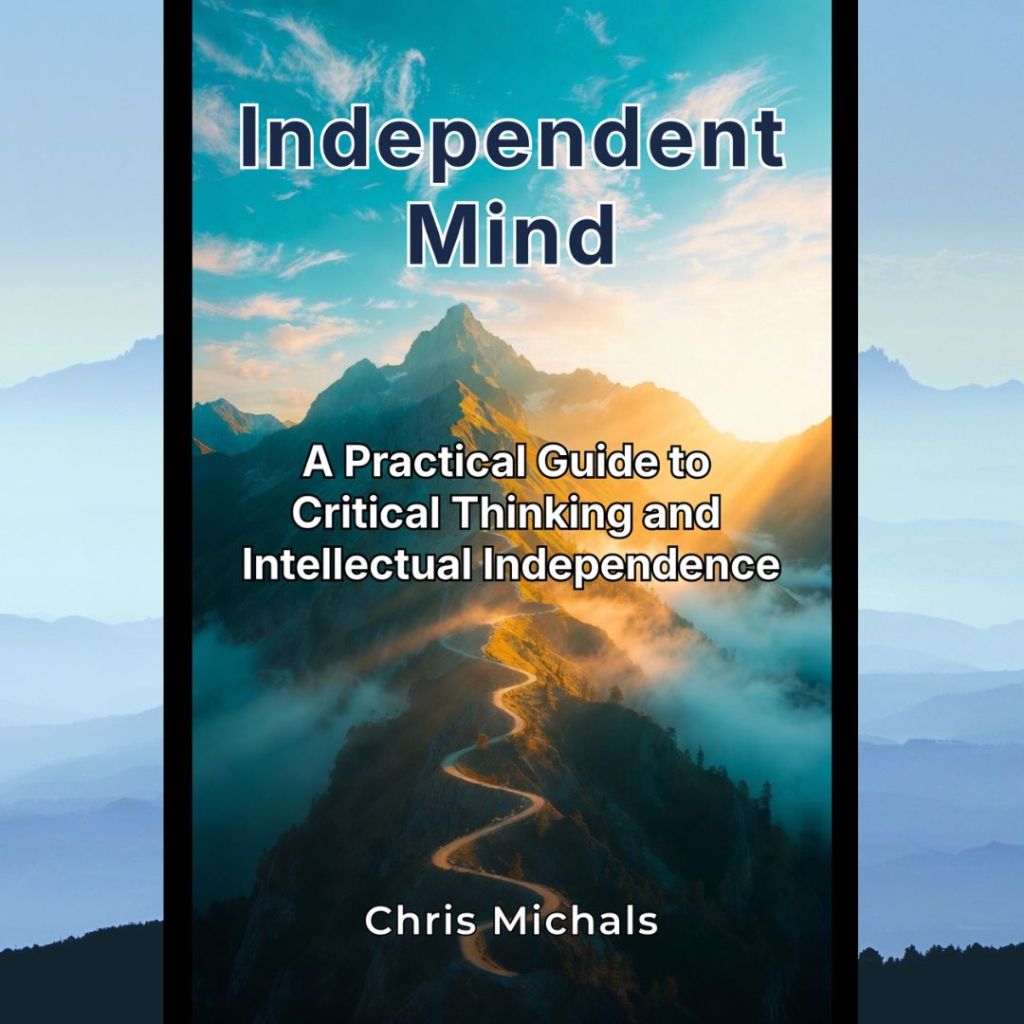
While you’re at it, we recommend a book written for exactly this purpose. It’s not about science or beliefs. It’s just about all the practical tools we never learned in school. Try it out. See what happens when you start asking questions rather than living a life of assumptions.
Blue Cube Rocket is an energy and space invention company that started with a question. We’ll get to which one later.

Get our latest posts in your inbox.