Today we need to explore an area of science that most of us were never taught. It is one that you’ll rarely hear explained in a classroom. This is a topic that cuts straight to the heart of how everything works and forces a re-examination of everything we’ve been told to believe. If you follow us long enough, you’ll see this is a favorite view of ours — to question everything, especially when there are staunch mainstream views that don’t always hold up under scrutiny. For today, let’s start with a very high-level overview of something we bet you’ve never considered…
What Is Space, Actually?
When most of us picture space, we picture emptiness: cold, dark, and quiet, with gravity doing nearly all the work. That is a mainstream belief we were all taught. But is it correct? Are there any other theories out there that we need to look at just to make sure what we’ve been told is actually true?
Surprisingly, the answer to that last question is — YES. There are alternative theories and one of them suggests a very different basis for how everything works: the Electric Universe model.
We’re sure you’ve never heard of this before so we thought we’d just introduce a few of the main points and then let you go look up the rest on your own.
Electric Universe?
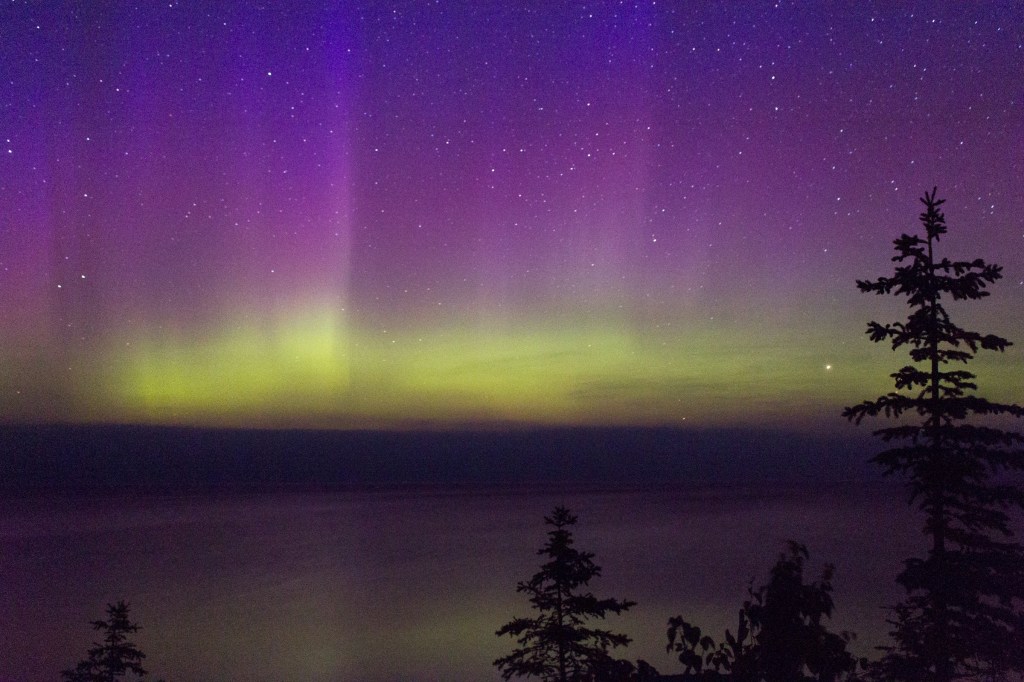
Start with plasma: Plasma is a gas so energized that its atoms split into charged particles. You’ve seen it in lightning, in neon signs, in flames, and in the aurora. It’s also what the Sun and the stars are made of. Most of the visible matter in the universe is plasma, and plasma responds to electricity and magnetism very differently than ordinary gas does.
Currents in space: Over a century ago, Norwegian scientist Kristian Birkeland proposed that the aurora is powered by electric currents flowing between the Sun and Earth. Space probes later confirmed those currents, and they still carry his name. Later, Hannes Alfvén, who won the 1970 Nobel Prize in Physics for his work on plasma, argued that electricity and magnetism might play a much bigger role across the cosmos than most textbooks suggest.
Where the Electric Universe comes in: Mainstream astronomy uses plasma physics too, but it gives gravity the leading role. The Electric Universe model asks whether electricity deserves more credit than it gets for how stars, galaxies, and space weather behave. We’re not asking you to accept that. We’re asking you to look at it.
Why it matters to us: If the universe is electric, then space isn’t empty. It’s full of energy, much of which we’ve barely begun to think about. That’s why Blue Cube Rocket is an energy and space company. We can’t say more about the invention yet, but we can point you to the questions that shaped our thinking.
Where to start
- The Thunderbolts Project on YouTube is a good introduction. Not everything there is easy, and you don’t have to agree with all of it.
- Look up Birkeland currents and Alfvén’s plasma work, and judge the evidence yourself.
- Ask yourself where an idea comes from before accepting or dismissing it (many mainstream theories have much bigger gaps than we were led to believe when you study their origins).
A few more important points about the EU (verified)…
- Plasma definition: Plasma is ionized gas (atoms split into free electrons and ions). It is the fourth state of matter.
- Everyday examples: Lightning, neon/fluorescent signs, flames (partially), and the aurora are all plasmas (or contain significant plasma components).
- Cosmic prevalence: The Sun, stars, and the interstellar/intergalactic medium that makes up most of the visible baryonic matter in the universe are plasmas.
- Electromagnetic behavior: Plasmas respond strongly to electric and magnetic fields in ways neutral gases do not. This is standard plasma physics.
- Birkeland currents: Kristian Birkeland correctly proposed field-aligned currents linking the solar wind/magnetosphere to the aurora. Space-age measurements confirmed them; they are still called Birkeland currents.
- Hannes Alfvén: He won the 1970 Nobel Prize in Physics for magnetohydrodynamics (MHD) and fundamental work on plasmas. He emphasized that electromagnetic forces can be important in cosmic plasmas and was sometimes critical of purely gravitational models.
A Note About Our Views
We didn’t come into the world of science and technology with the intent to start a war with modern-day science. We used to believe what we were all taught in school. But then something changed and we could no longer see the universe the same way. We’ve already hinted at what that was.
This post is only a first look at what we have come to understand as correct science. We’ll expand on this in future posts.
We don’t expect you to take our word for any of this. Our recommendation: wait and see. Until then, be open minded and learn to ask the right questions (our favorite motto).

Photo by Brad Mann on Unsplash
Blue Cube Rocket learned to look at the sky a little differently. Stay with us, and you might too.

Get our latest posts in your inbox.